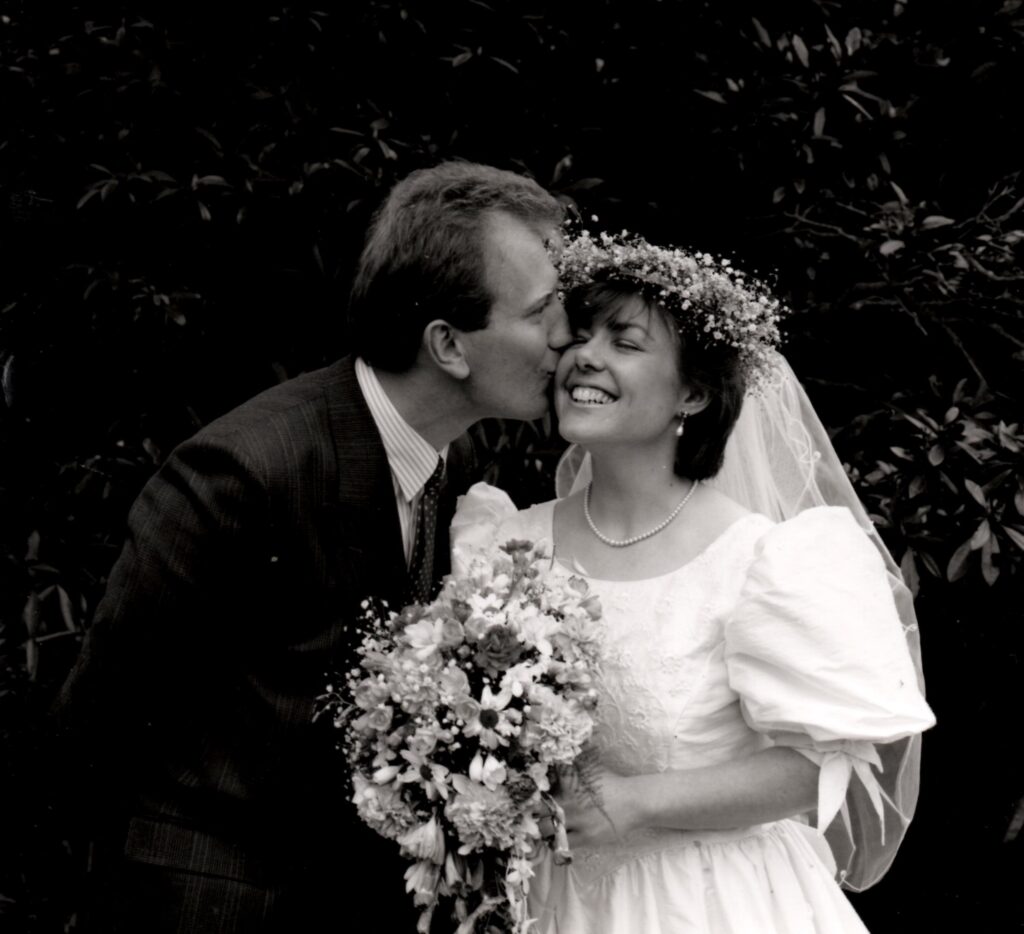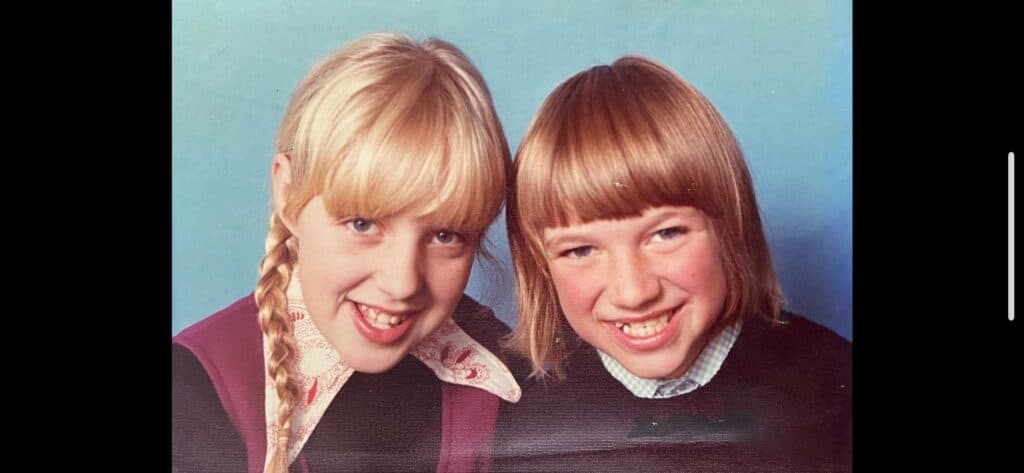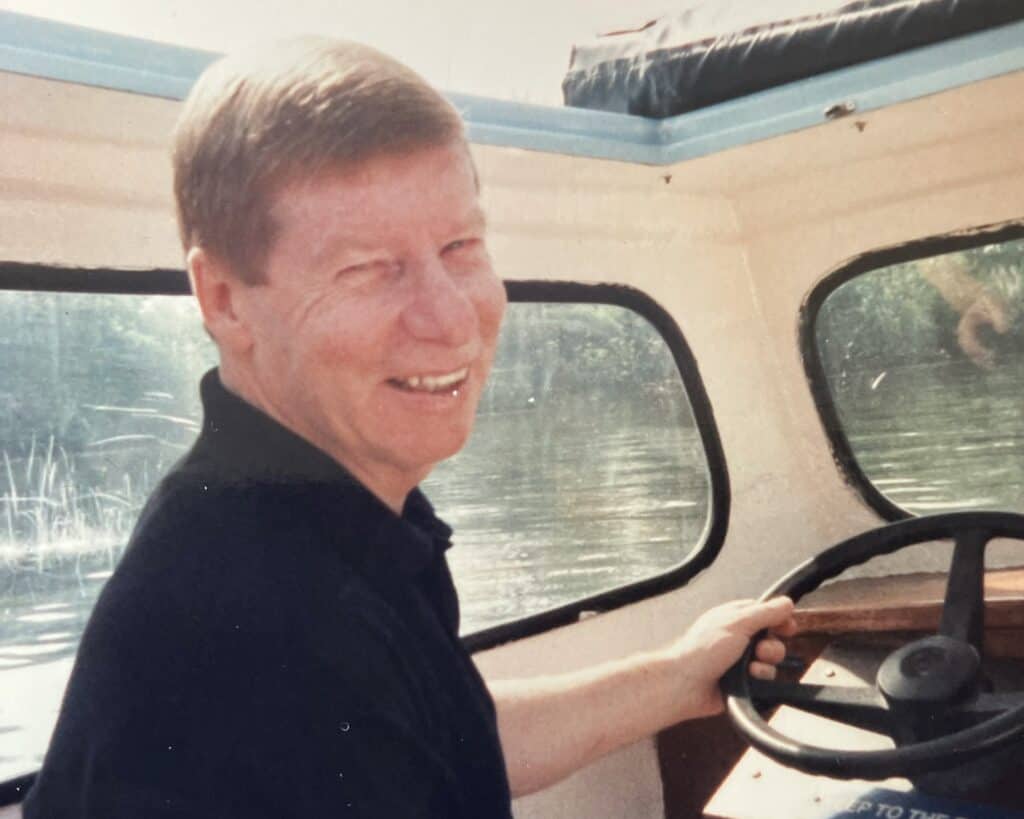

Elizabeth chose to share her story during her stay at the hospice, before returning home.
When Elizabeth first arrived at Eden Valley Hospice, she was exhausted. Months of severe nerve pain had taken away her mobility, her independence, and her sense of safety.
Elizabeth’s cancer journey stretches back many years. She was first diagnosed with breast cancer in 2015 and then with secondary lung nodules in 2016. After treatment, she enjoyed nearly eight years of remission. Years where she adapted to arthritis, staying active around Wigton with sticks and a walker.
But in 2025, her health began to decline sharply.
“I thought it was just the arthritis getting worse… but then they found cancer bits on the spine, and I had disc degeneration and bulging. It all suddenly got worse. I could no longer go out. By February, the nerve pain was so terrible.”
As the pain became unbearable, Elizabeth found herself admitted to the hospital, an experience she still struggles to talk about.
“It was really terrible there… Those three days in the infirmary were like 300 years. I was screaming in pain. I couldn’t move. I’ve never felt pain like that in my life.”
A palliative care doctor who had seen her days earlier realised the urgency of her situation and arranged a bed at Eden Valley Hospice.
“When I got in here… What a difference it has made to my thinking, to my physical being, to everything.”
From her first day, Elizabeth felt listened to in a way she hadn’t experienced before.
“The doctors actually come in, listen to you, and treat you like a normal human being. They tweak things as you tell them what’s going on. They’re actually doing something.”
Her medication was completely reviewed. Nerve pain medication was carefully adjusted, mattresses were changed to give specific support, and alternative therapies were explored.
“They’ve changed all my medication for the better. Now I can actually get up, go to the toilet, walk a bit down the corridor. I’m standing and walking with their help.”
What brings Elizabeth the most comfort is the kindness she receives from every member of staff.
“The actual care is amazing. They couldn’t do more for you. The people, the nurses, the carers, the cleaners, they’re just amazing. Nothing is too much trouble, day or night.”
Even during long, painful nights, she never feels alone.
“They’re dealing with all this terrible pain that comes on at night, whether you’re on tablets or not. They try to make it manageable for when I go home.”
Elizabeth also praised the catering team for continuing to provide tasty food during her stay.
“That’s another thing I must mention for advertisement, their food is absolutely fab!”
“Like the prawn cocktail, I’ve had that every day now since I’ve been in here as a starter for lunch. It’s just absolutely lovely. Every day, someone comes around with the menu, so you just choose what you want. I’m trying not to eat them all because they’re so nice.”
Returning home is Elizabeth’s goal at the time of the interview. Not to her old life, but to a new version of it that keeps her safe and supported.
“I thought I’d be walking up the stairs again, but that’s not going to happen. The Physio and Occupational Therapist explained I’ll need to live downstairs. And that’s okay – it’s part of recovery.”
The hospice team has helped arrange everything she needs, from a hospital bed, recliner chair, adult social care support and a safe discharge plan. Her family has been supporting her in the background too. Her son, Ben, is based in London and has been helping to organise furniture removal and storage. Her sister, Frances, has been visiting every day to ensure that, when the time is right, she can safely return home. Elizabeth explains the impact and benefits that her care has had on her family.
“For my sister to see me getting all this care and being safe… It’s made a big difference to her. And my son phones every day, he knows I’m not just telling him I’m okay. He knows it’s true.”
Elizabeth wasn’t a stranger to hospice care. She attended Day Hospice in 2016, which opened her eyes and her son, Ben, was able to have a tour too.
“It’s been very difficult for him. But also, he saw the hospice that time, that one day. So he knows what it’s like and realises that I’m okay. He knows it’s good, which helps him.”
Prior to her time at Day Hospice, she realised she once had the same fears many people do.
“I thought a hospice would be dreary and horrible… Just a place you came to die.”
“I realised the rooms were peaceful and the care was so kind. It wasn’t a dreary place. People were enabled to live as much as possible.”
That experience meant that when she needed inpatient hospice care, she wasn’t afraid.
“I was pretty lucky. I wanted to be here. If I hadn’t had that Day Hospice experience, I think I would have been frightened.”
Despite the seriousness of her illness, Elizabeth is very clear about her purpose at the hospice.
“The hospice is a recovery place for me at the moment. I’m concentrating on living. I’m focused on getting better enough to get home.”
A message to others
If she could speak to anyone who feels afraid of hospice care, her answer is simple:
“Don’t be afraid. It’s not a place you come to die. It’s a place where you begin to recover.”
Elizabeth is passionate about the future of hospice care and is worried about the uncertainty of its future, not just in Cumbria but for the whole country.
“It’s a very scary thought, hospices closing. Even 10 beds could be taken away. Fundraising is so important.”
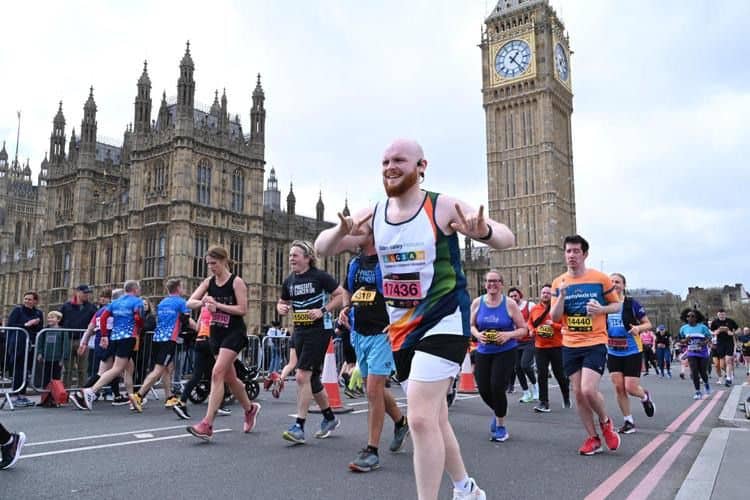
Elizabeth’s son, Ben, previously took on the London Marathon to raise funds for Eden Valley Hospice and Jigsaw, Cumbria’s Children’s Hospice. This was long before she was an inpatient, but they both knew the support that hospice needed and wanted to do what they could to help.
“For people to help, just to give a little bit of money perhaps, but also to be part of fundraising, runs, tea mornings, anything like that. To make sure hospices stay open.”
She wants people to understand that hospices don’t just support patients — they support families, communities, and everyone touched by serious illness. Even after nearly three weeks of inpatient care, her gratitude hasn’t faded.
“I can’t thank them enough for what they’re doing for me. The care, the kindness… I can’t get over it.”
For Elizabeth, the hospice has been a lifeline. A place where pain is managed, dignity is restored, and hope becomes possible again.